Connecting with 90 business partners to improve B2B processes
Street Baker, the largest macaron production company in Central Asia, supplies local businesses such as coffee shops and restaurants. By identifying inefficiencies in the workflows, businesses can decrease order delays and mix-ups while boosting productivity and customer satisfaction.
My aim was to identify opportunities for a small-to-medium enterprise to scale and grow. The research gathered information about partners' preferences, experiences, and expectations regarding Street Baker products. Interviews with the studio's senior management and its partners were conducted to understand the logistics of B2B operations and suggestions for improvement — so Street Baker can strengthen its B2B processes and remain a dessert supplier of choice.
One of the leading macaron providers in Central Asia — 61,000 macarons produced in a single month.
Street Baker creates innovative and popular desserts and has become one of the leading macaron providers in Central Asia. 61,000 macarons were produced throughout December 2022.
At the moment the company has more than 90 partners in Bishkek, as well as several in the regions, and the list of partners is regularly updated.
Running a B2B supply chain over WhatsApp.
Using WhatsApp as a primary communication system caused numerous problems for Street Baker — a lack of organisation and tracking, privacy concerns, and communication breakdowns. Poor logistics damage a company by leading to delays in fulfilling orders, dissatisfied partners, and negative reviews. It's imperative for Street Baker to invest in a more efficient and secure B2B system.
I was a member of the research product team focused on improving B2B processes. My responsibilities included collaborating with B2B partners, implementing new strategies, and developing methods to streamline their purchasing experience.
Data collection through interviews, a survey, and observations. Interviews were conducted with a senior manager of Street Baker as well as its partners to gain insight into the challenges of optimising B2B processes. The survey was distributed to business partners to collect quantitative data on their perceptions of the company's B2B systems.
Qualitative data from interviews and observations was analysed using thematic analysis to reveal key themes and patterns. Quantitative data from the survey was analysed using descriptive statistical methods to better understand business partners' perceptions of the company's B2B operations.
An anonymous survey of 90 business partners.
An anonymous survey of Street Baker's business partners was organised to collect quantitative information about their preferences, experiences, and expectations. Five blocks of questions were organised to collect the data:
- Create a portrait of a business partner (branch location; number of branches supplied; duration of cooperation with Street Baker).
- Determine the level of satisfaction of the partners and their preferences.
- Arising problem situations and how effectively they are solved.
- Ordering process (overall efficiency, responsiveness, literacy, and friendliness of the managers' answers).
- Ways to communicate with Street Baker's managers, and the potential idea of creating a single platform for business partners.
The final sample size was 90 people — based on the number of existing business partners.
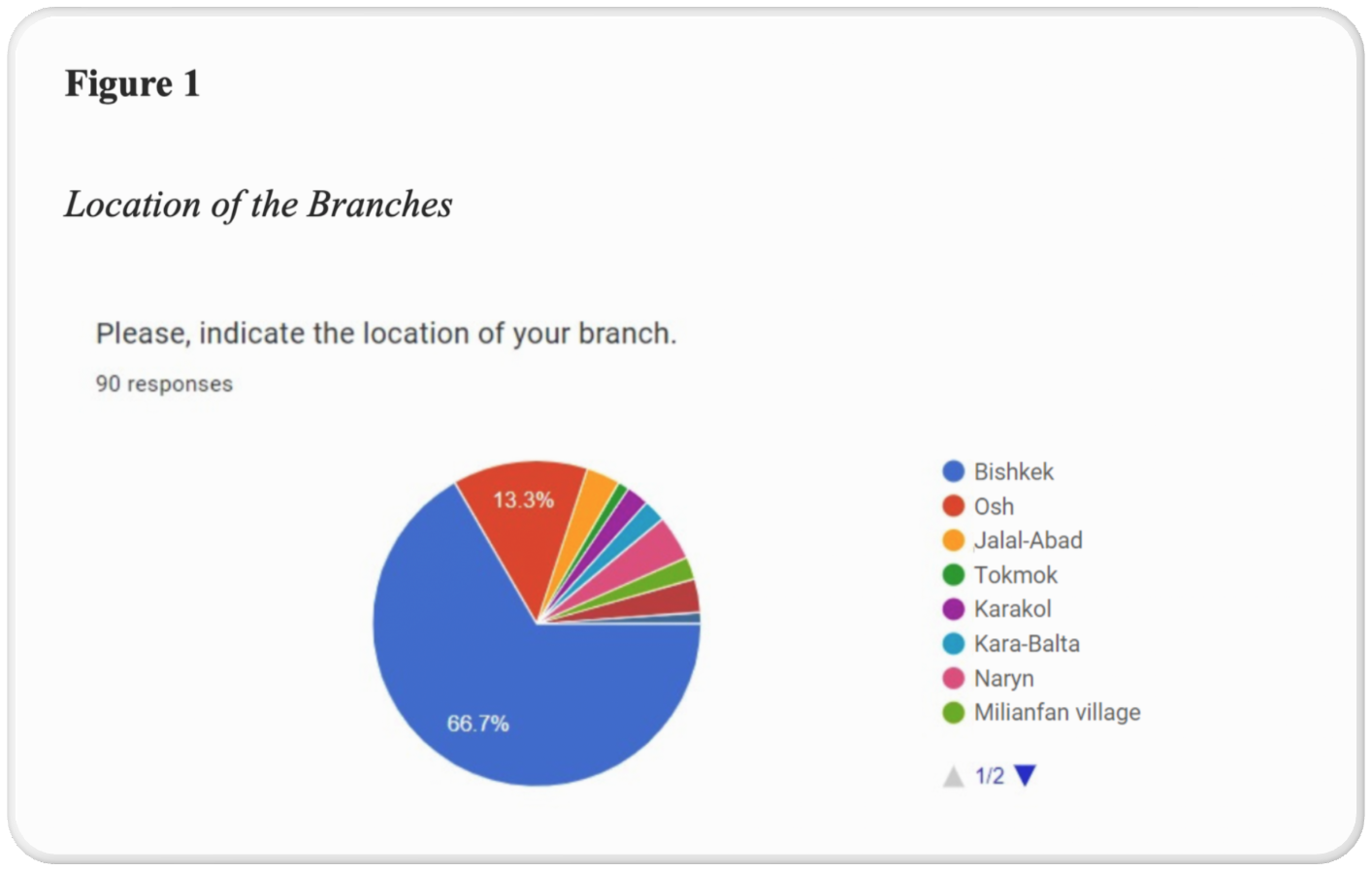
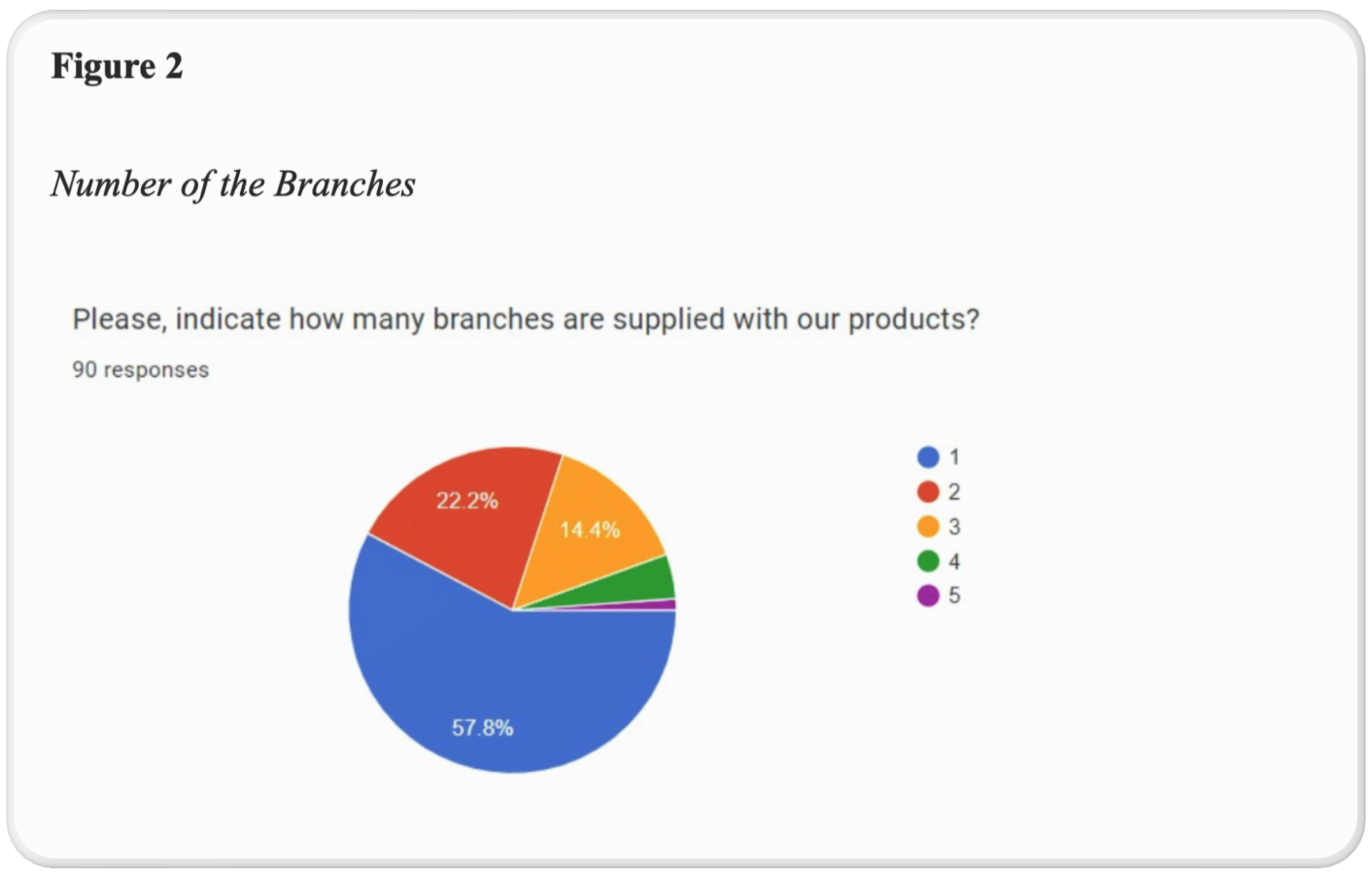
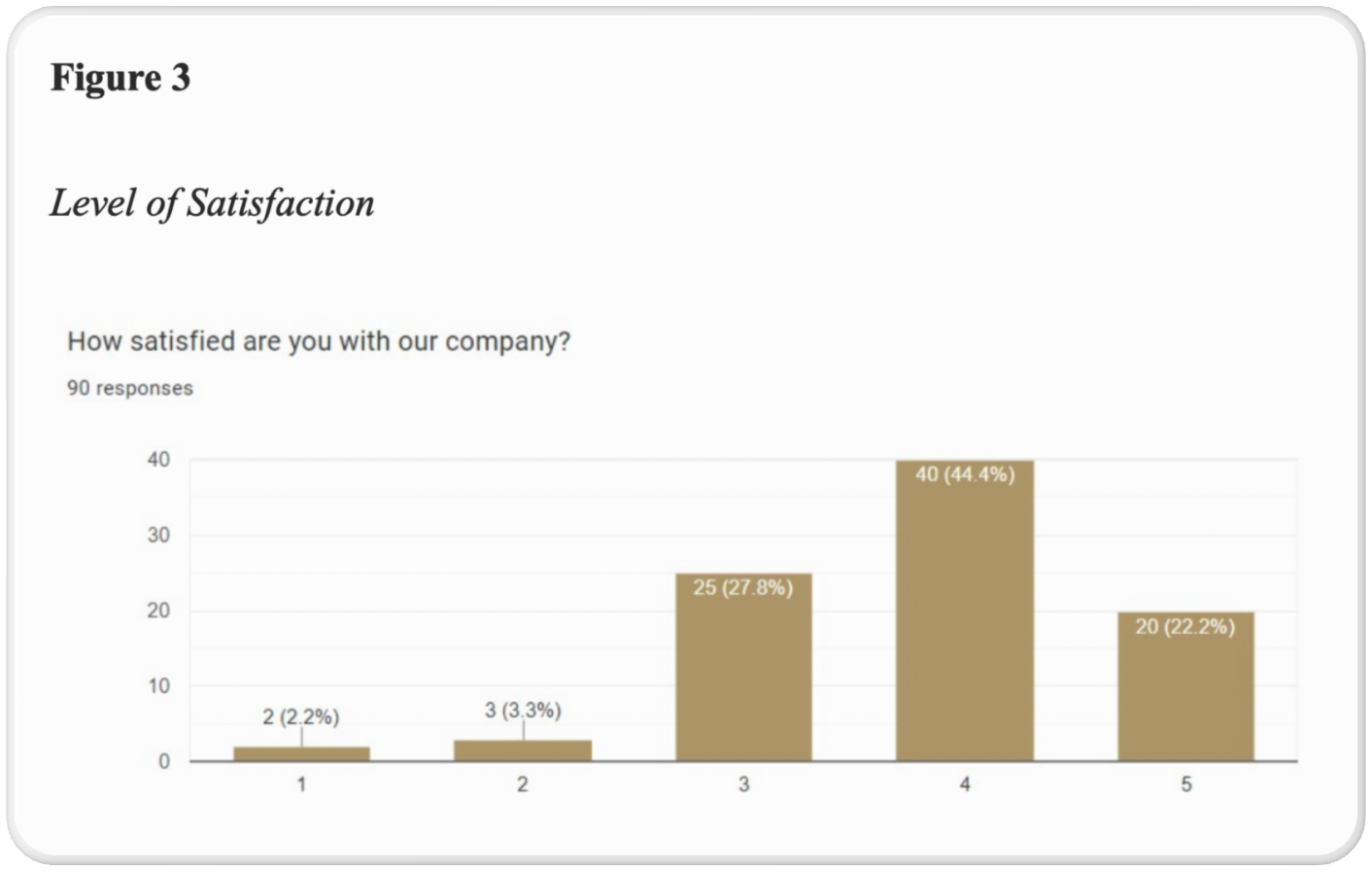
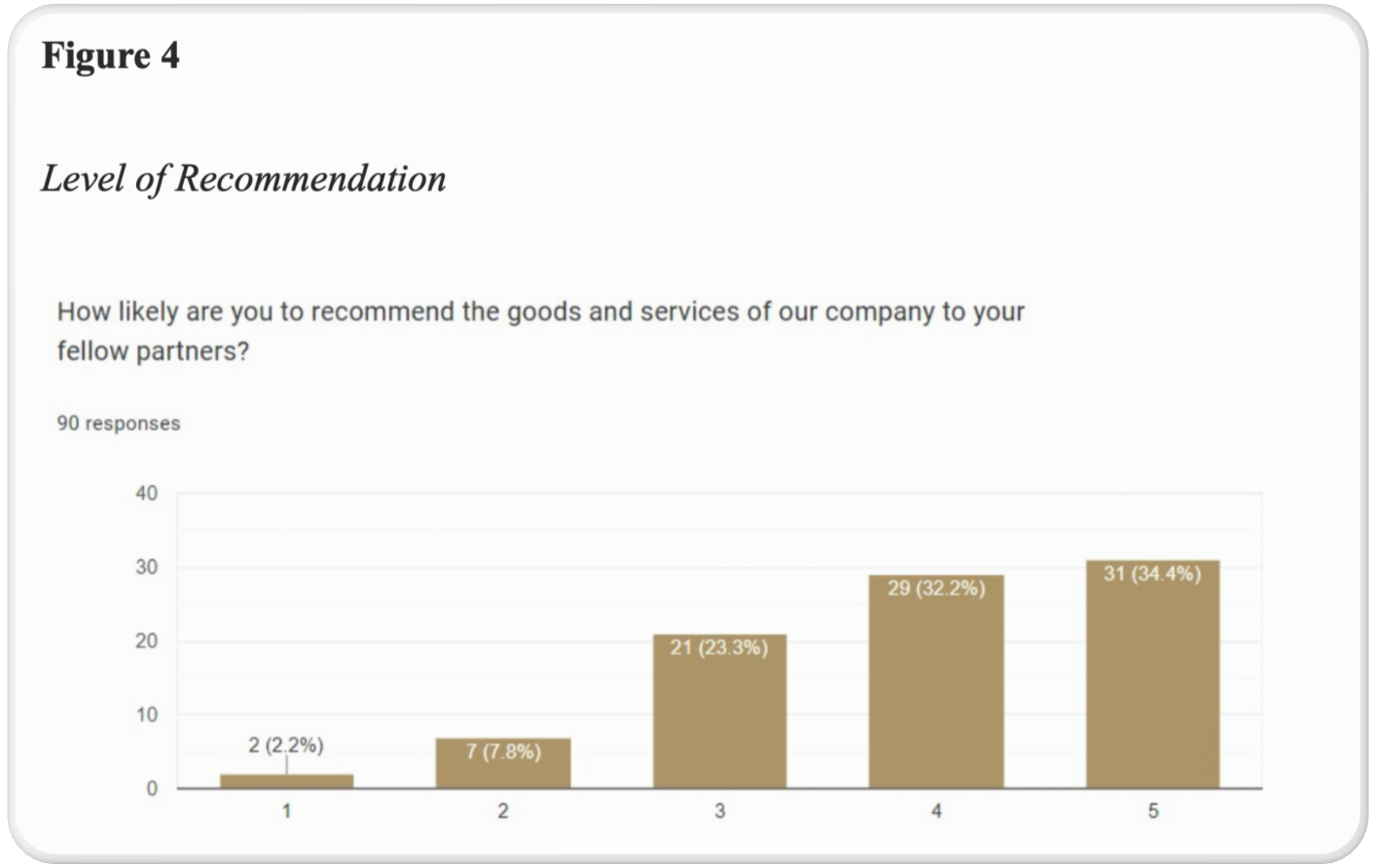
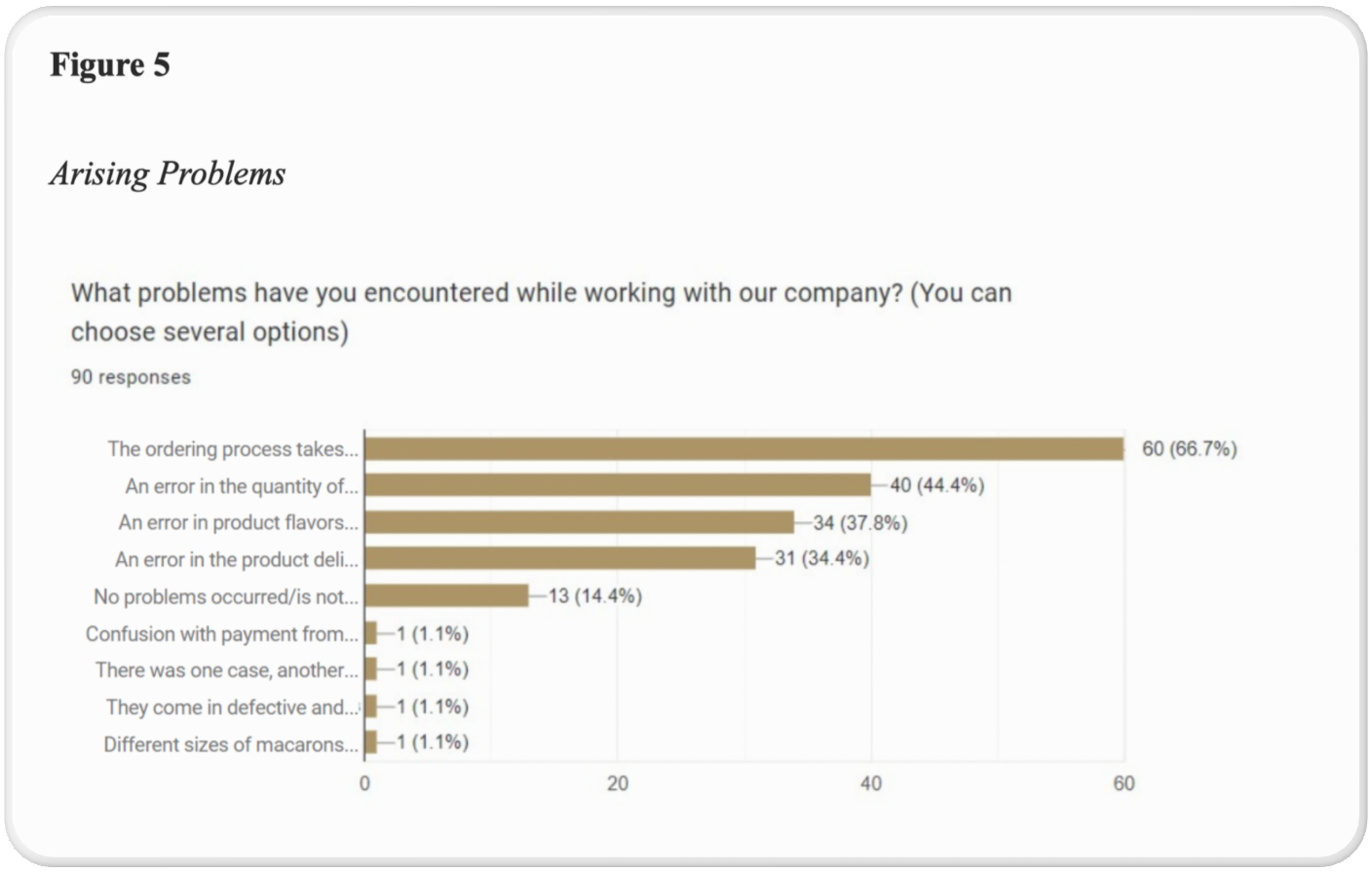
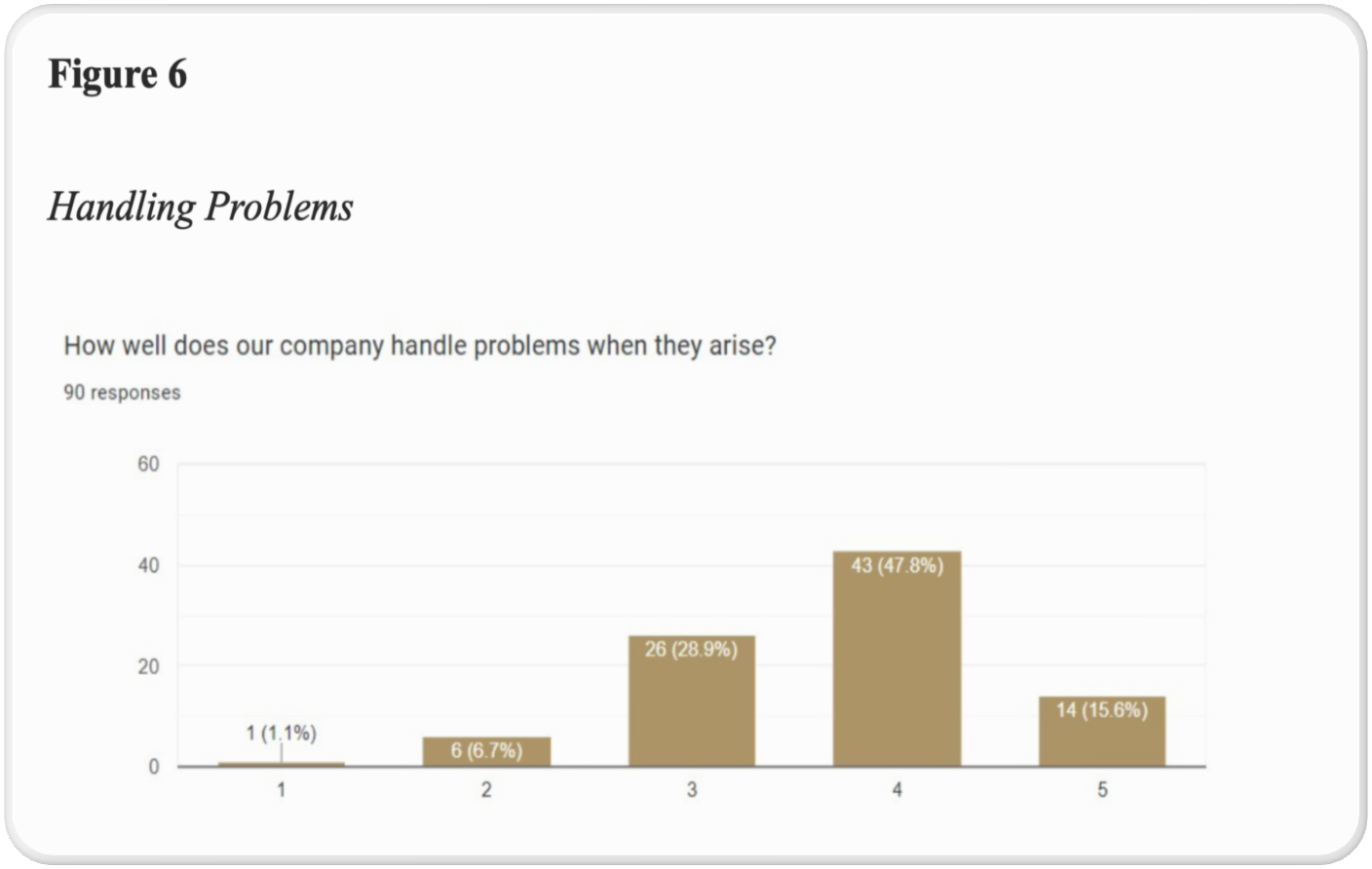
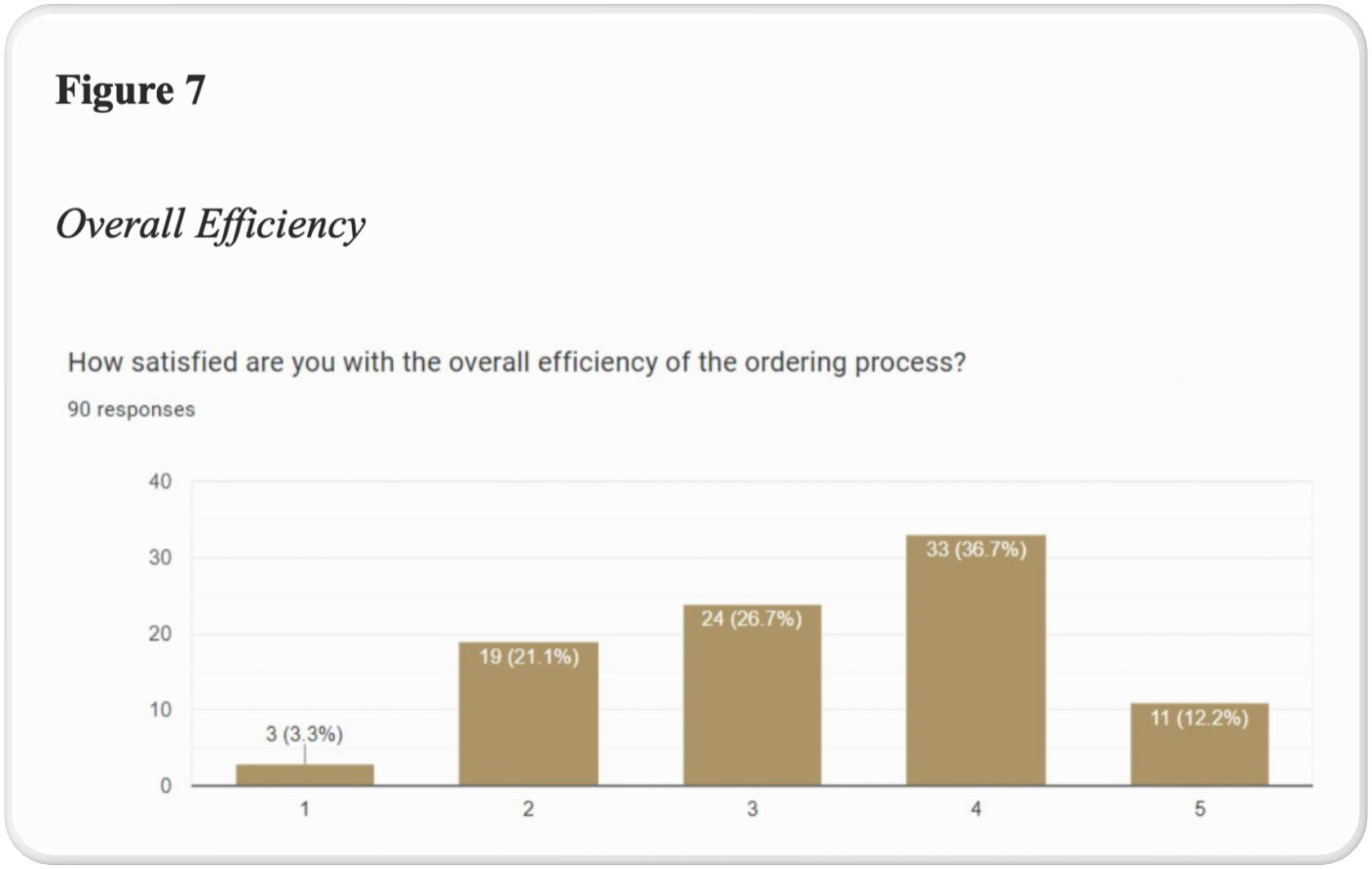
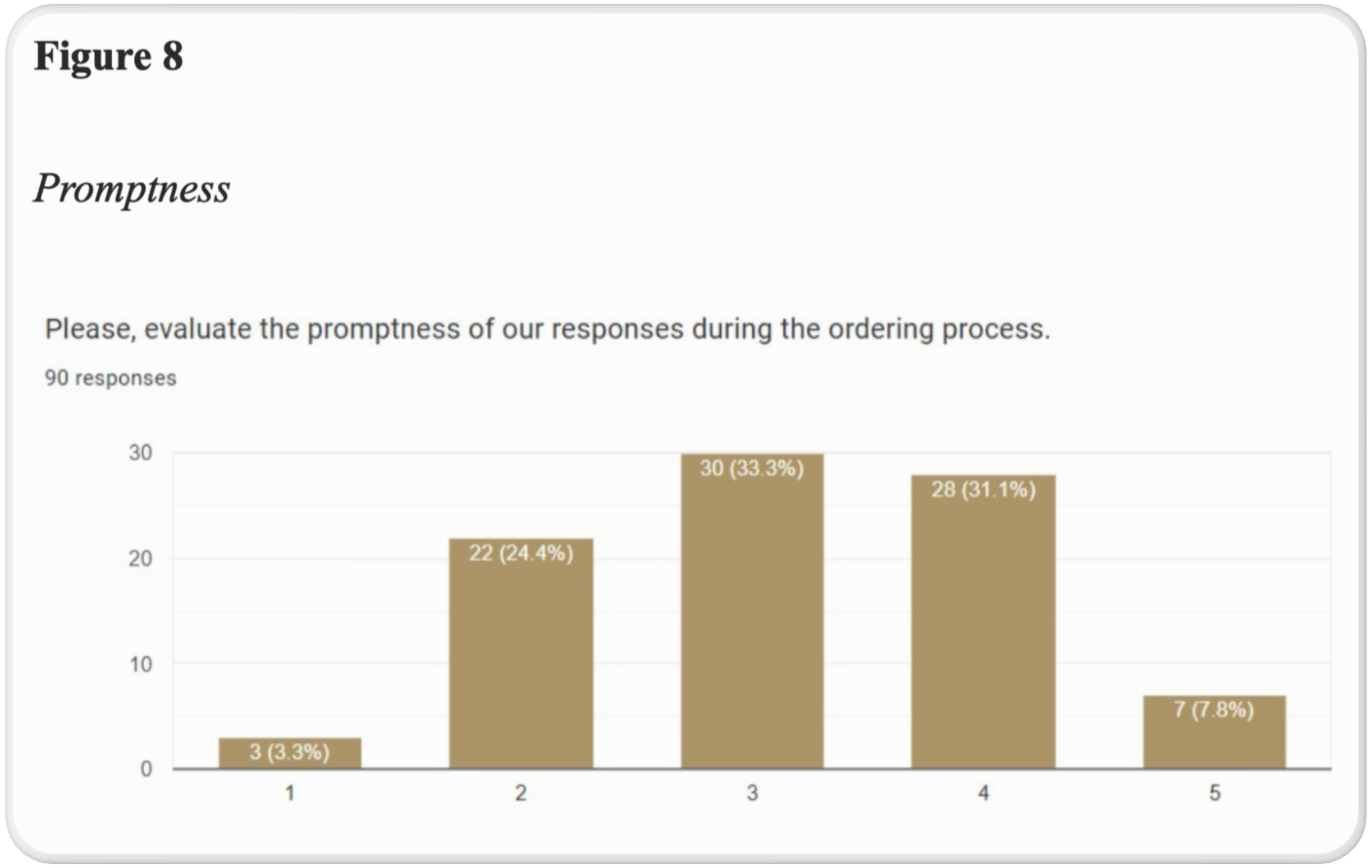
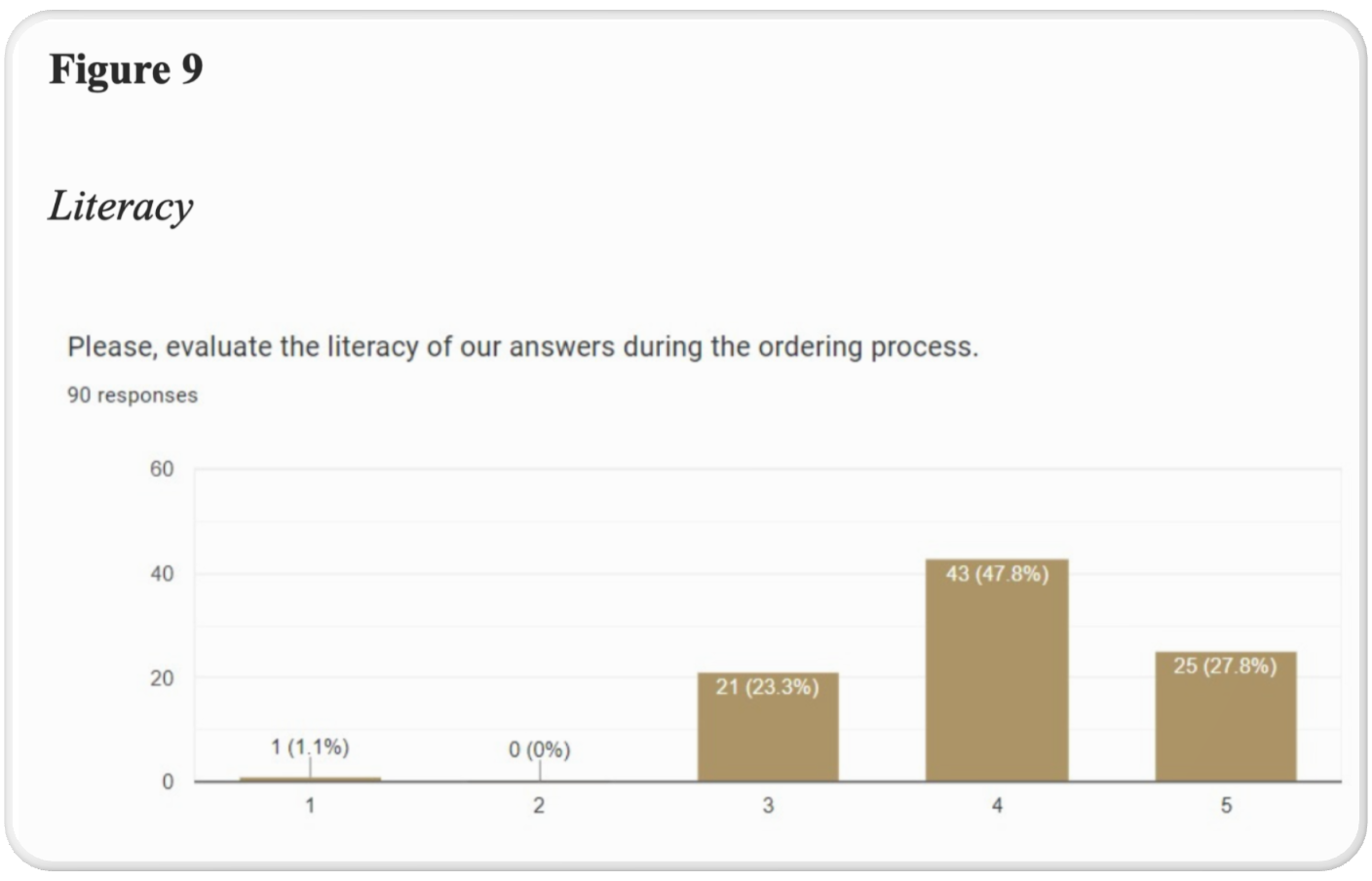
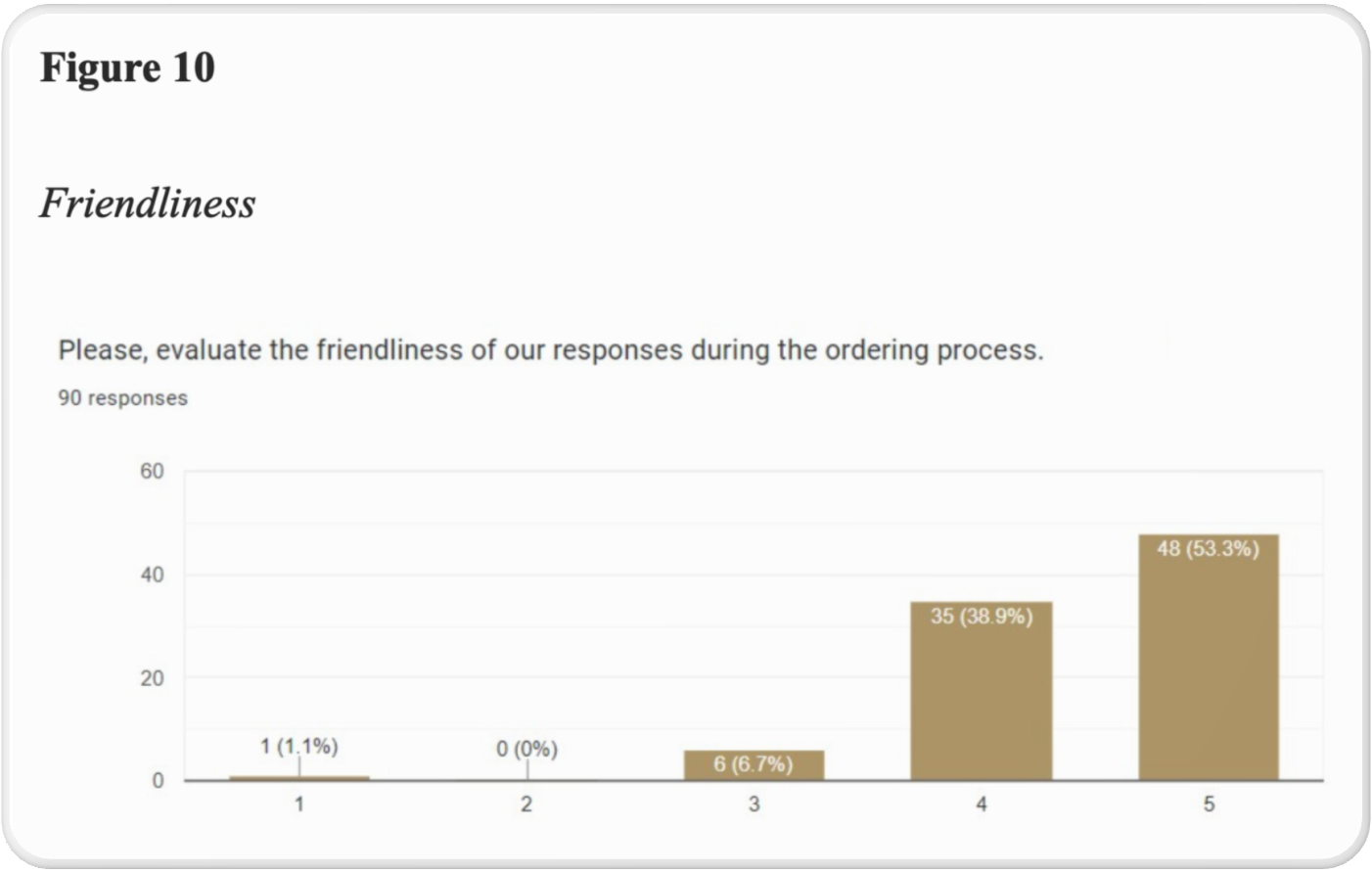
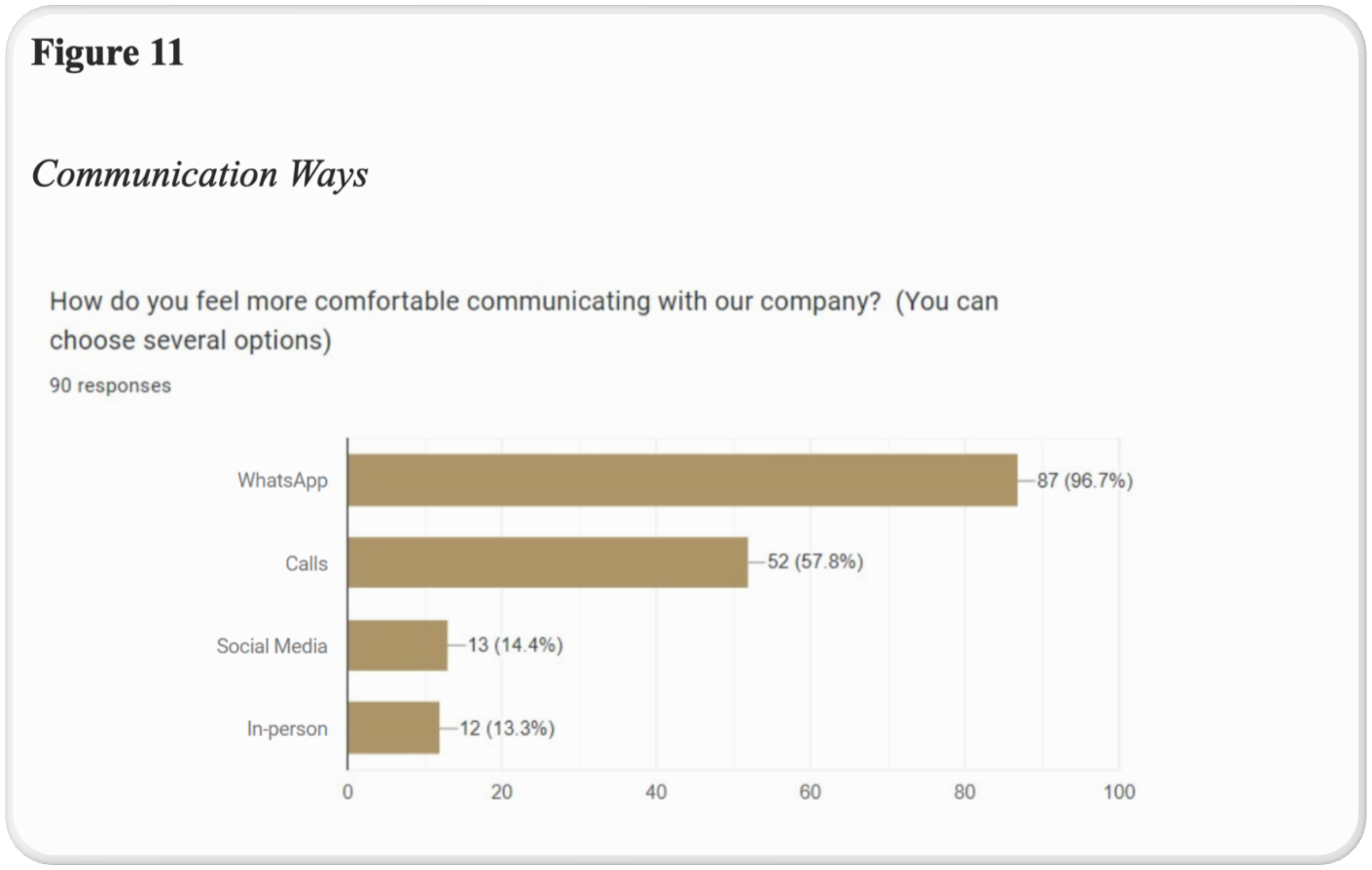
Among the survey responses, one partner was chosen who revealed difficulties in the B2B system. Summarising the whole interview, seven insights were identified:
- Trend-consciousness. The partnership was initiated to tap into the rising popularity of macarons — showing the importance of being aware of market trends and adapting to customer demands.
- Customer satisfaction. Since introducing the macarons, the partner has seen more satisfied customers and increased foot traffic — quality products that meet demand drive growth.
- Demand-driven ordering. The partner orders based on customer demand rather than equal quantities of each flavour — knowing preferences and tailoring operations matters.
- Communication challenges. Ordering is slow and inefficient over WhatsApp, causing wrong orders and incorrect delivery dates — a streamlined process is needed.
- Payment challenges. The partner has faced accounting errors — a secure, reliable payment process is essential.
- Delivery challenges. No tracking system to monitor order status — a reliable delivery system and communication channel ensures timely delivery and avoids dissatisfaction.
- B2B system optimisation. The partner is enthusiastic about a single ordering platform that would significantly reduce existing problems and optimise the process.
A dedicated B2B ordering app.
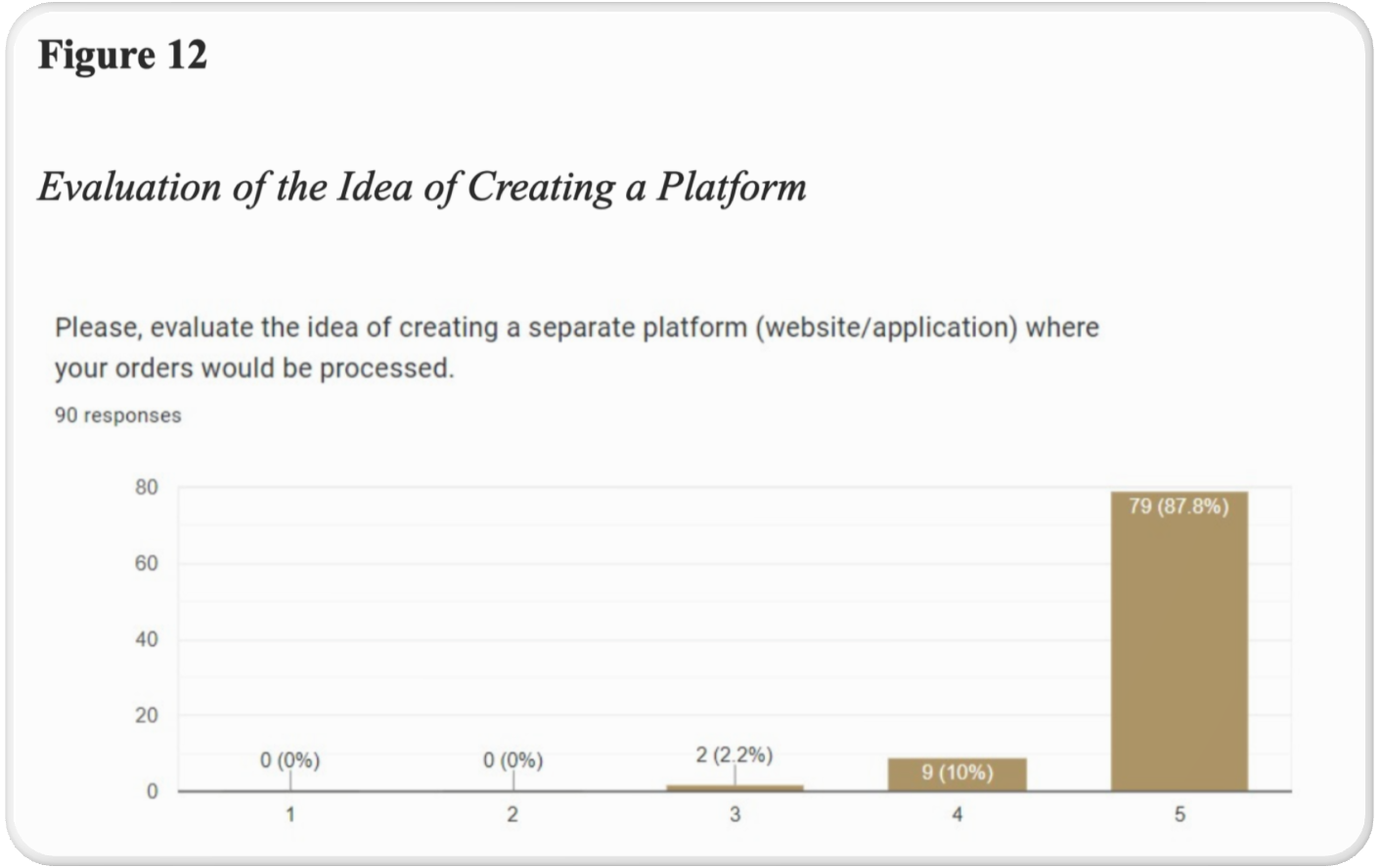
If the company considers a mobile application as a possible solution, 87.8% of respondents would be interested in such a platform. A new mobile application would lead to higher overall satisfaction, the best user experience, and an optimised ordering process. The product objective is to:
- Develop a user-friendly application with features such as quick order processing.
- Implement real-time order tracking in the application.
- Allow analytics features — detailed data and graphs for future purchases and planning.
- Provide a user-friendly, well-considered interaction design for the mobile interface.
- Ensure the application is protected and has high security for partners' accounts.
Minimise the day-to-day problems faced by Street Baker by creating a mobile application.
Confidently and efficiently order online.
Make people aware of the benefits of online ordering while increasing brand awareness.
Designing for a real partner: Dodo Pizza.
For the target audience, taking one of the B2B partners shows detailed information and interaction with the application — helping to deeply understand all user processes and steps. The user persona is Dodo Pizza, a popular pizza chain in Bishkek. Ordering macarons after pizza has become a popular combo, so ordering from Street Baker happens daily across Dodo Pizza's 6 branches, which order more than 500 macarons per day.
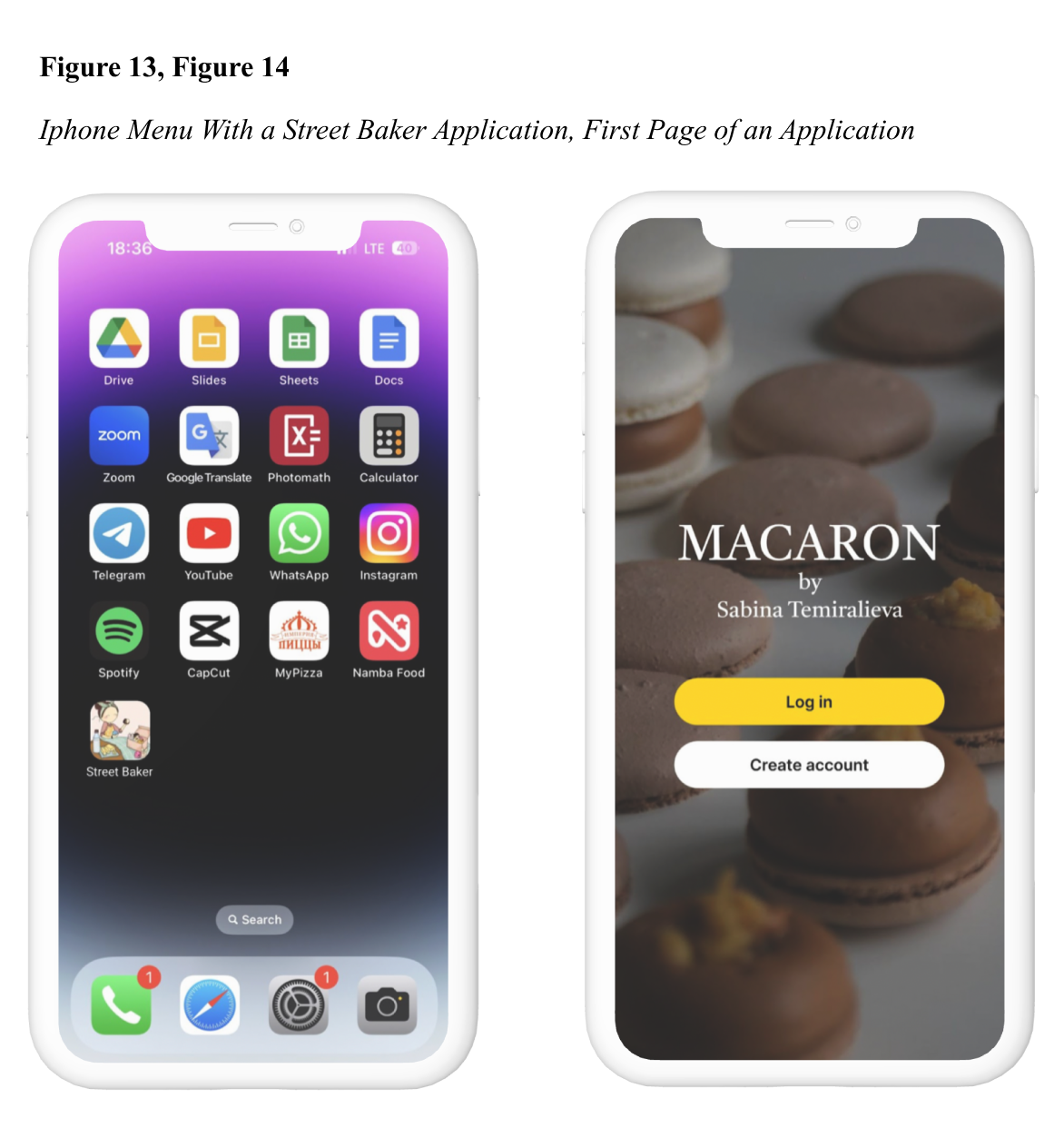
A user flow is a roadmap that guides the user from registration to finish. By improving and optimising the flow, the application delivers intuitive, smooth experiences that help users accomplish what they want. Below is the main user flow of Street Baker's application (Figure 15) — 10 steps in total.
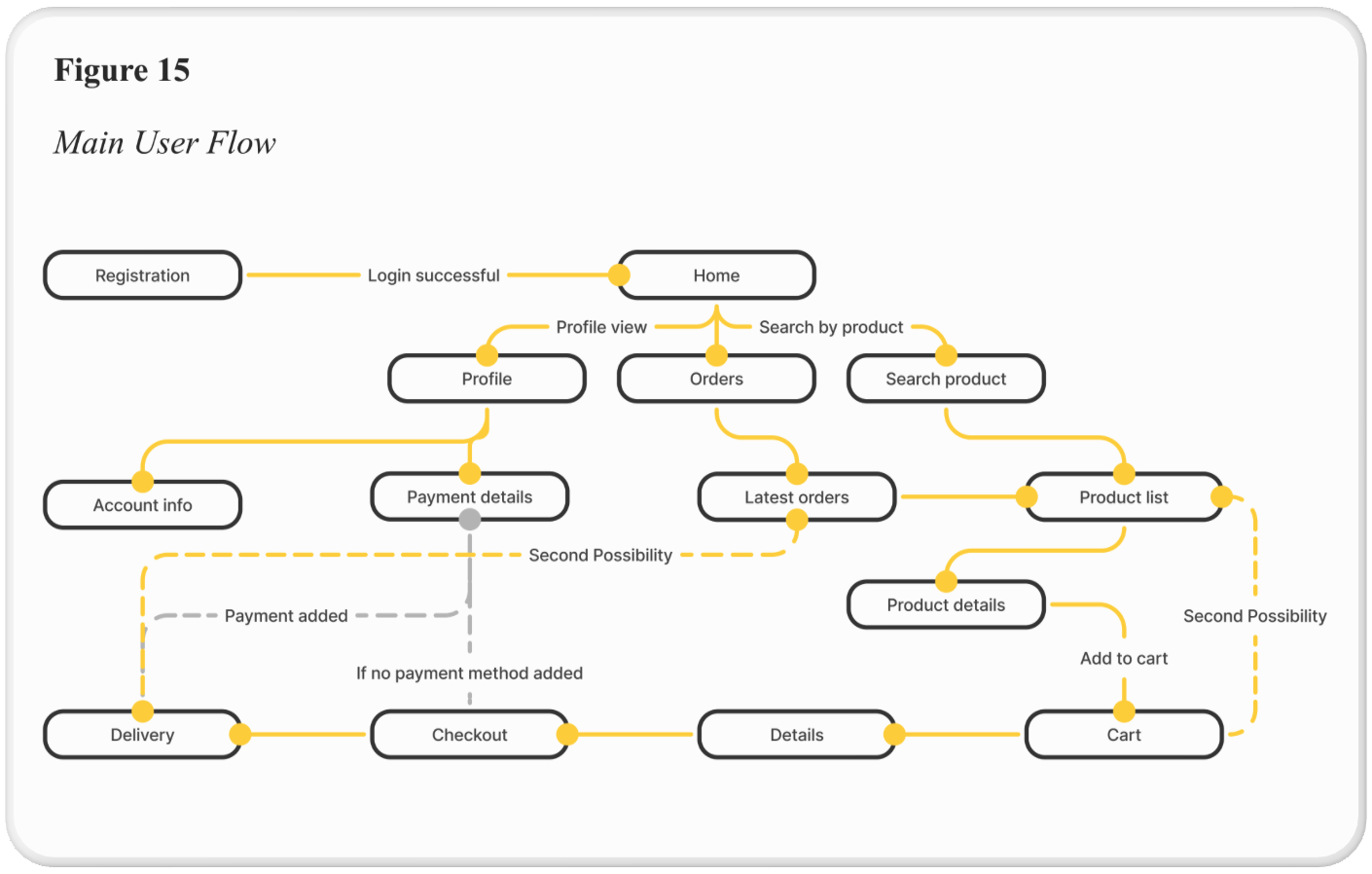
- Registration or login. Create a new account or log in to enter the homepage.
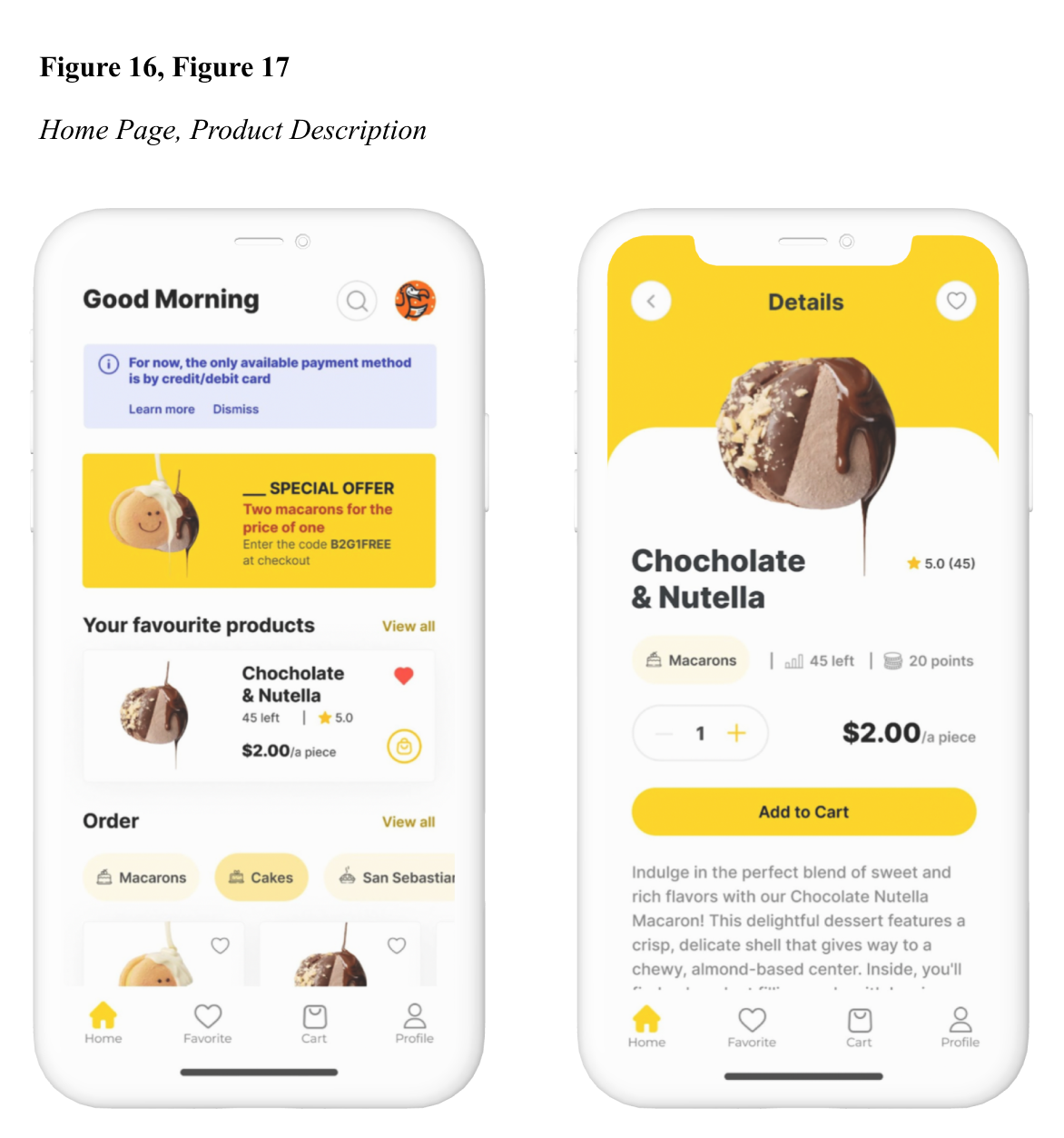
- Browsing & search. Browse categories or search for a specific product (Fig 16).
- Product selection. Add preferred products to a virtual cart; edit by quantity, size, or specifics (Fig 17).
- Cart management. Add or remove items, apply promo codes or discounts.
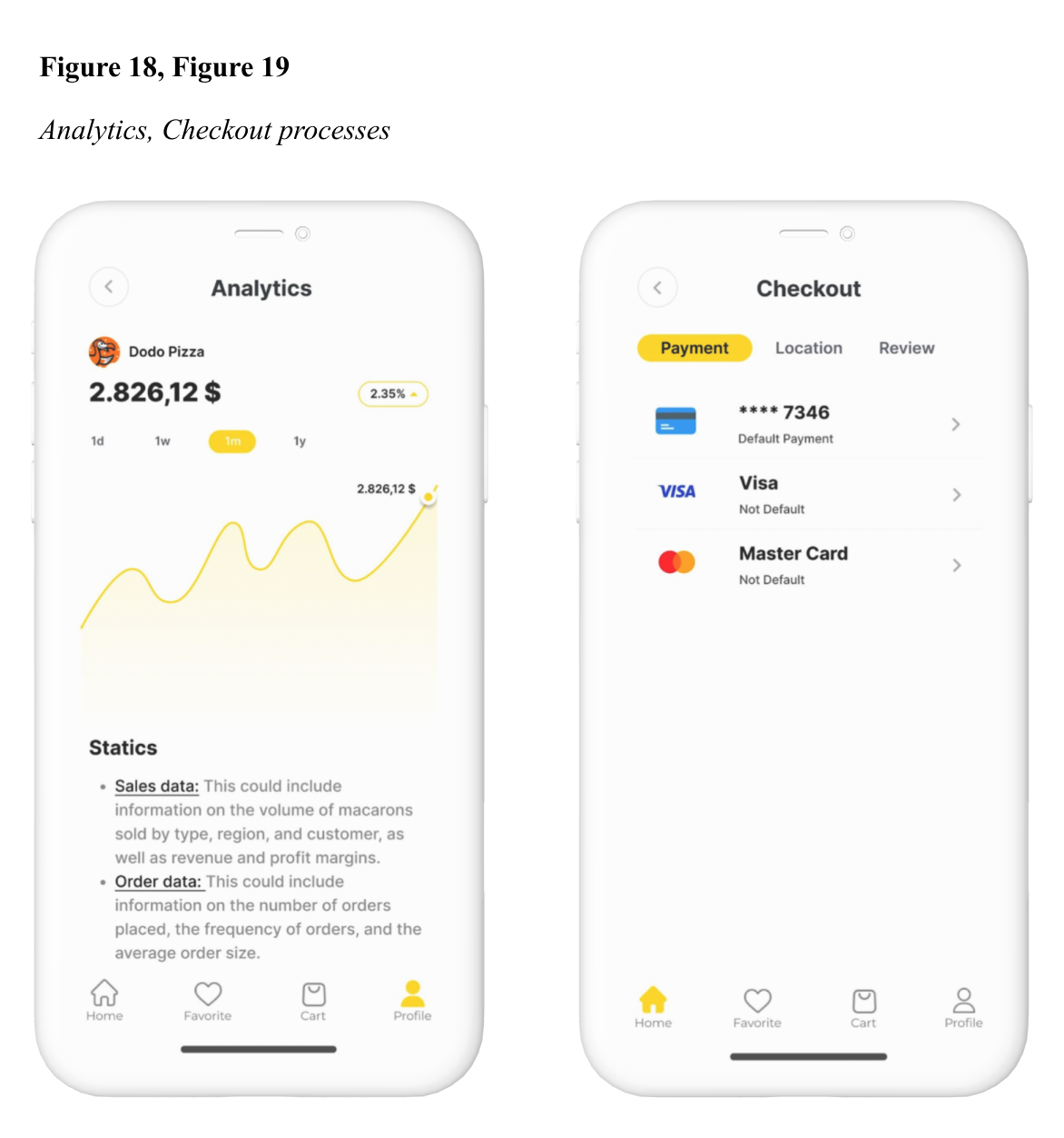
- Checkout process. Provide delivery info, time, payment methods, and other details (Fig 19).
- Payment. Fill in payment details or select an existing card; online banking and other methods supported.
- Order confirmation. A confirmation that includes all order information.
- Order tracking. Monitor status in real time, track delivery, and receive notifications.
- Delivery & collection. Receive orders for home delivery, or across all branches at once.
- Feedback & rating. Rate product and app quality, and leave comments on the service.
Analytics — a new feature for B2B users to monitor all products received and analyse data and graphs, supporting the financial and strategic parts of their companies (Fig 18).
Significant revenue growth and customer satisfaction.
revenue increase expected in the first year — fewer errors and delays in order processing.
revenue over manual processing by year three, as more customers adopt the app.
operational costs over the next year compared with manual processing.
The fully automated application reduces errors and delays in order processing. Quick ordering allows faster processing and accuracy. Using partner feedback, the product will keep updating and adding features to improve the ordering process. The application works automatically, allowing Street Baker to reduce company costs and improve customer satisfaction — a product with big potential and significant growth, beneficial in both the short and long term.